Ken Kundert |
|||||||||||||||||
 |
Contact Ken: Home Email Work Email Ken's public GPG key for encrypted email key id = 3E1C0A50; fingerprint = 4A47 DE44 3CEE 6D70 A892 347A 9B8F FF1D 3E1C 0A50 Ken's websites: More on Ken: |
||||||||||||||||
|
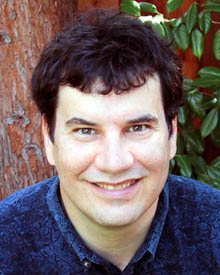
Ken is a founding partner at Designer's Guide Consulting, a firm dedicated to the idea that, given a good design and verification methodology, it is possible to design complex analog, RF, and mixed-signal chips that work as expected on the first try. Ken and his partner Henry Chang help design companies achieve this ambitious goal. Ken is known for creating two highly successful circuit simulators: Cadence's Spectre and Agilent's harmonic balance simulator. From 1989 to 2005, Ken worked at Cadence Design Systems as a Fellow. He created Spectre and was the principal architect of the Spectre circuit simulation family. As such, he led the development of Spectre, SpectreHDL, and SpectreRF. He also played a key role in the development of Cadence's AMS Designer and made substantial contributions to both the Verilog-AMS and VHDL-AMS languages. While in school he authored Sparse, an industry standard sparse linear equation solver and created Agilent's harmonic balance simulator. Before that Ken was a circuit designer at Tektronix and Hewlett-Packard, and contributed to the design of the HP 8510 microwave network analyzer. He has written three books on circuit simulation: The Designer's Guide to Verilog-AMS in 2004, The Designer's Guide to SPICE and Spectre in 1995, and Steady-State Methods for Simulating Analog and Microwave Circuits in 1990; and created The Designer's Guide Community website. He has also authored more than twenty patents and three dozen papers published in refereed conferences and journals. Ken is a Fellow of the IEEE. He received his Ph.D. in Electrical Engineering from the University of California at Berkeley in 1989, his M. Eng. degree in 1983 and his B.S. in 1979. Ken, along with Ricardo Telichevesky and Jacob White, received the 2022 IEEE/ACM Richard A. Newton Award for their paper entitled Efficient Steady-State Analysis based on Matrix-Free Krylov-Subspace Methods published at DAC in 1995. |
|||||||||||||||||
|
|||||||||||||||||